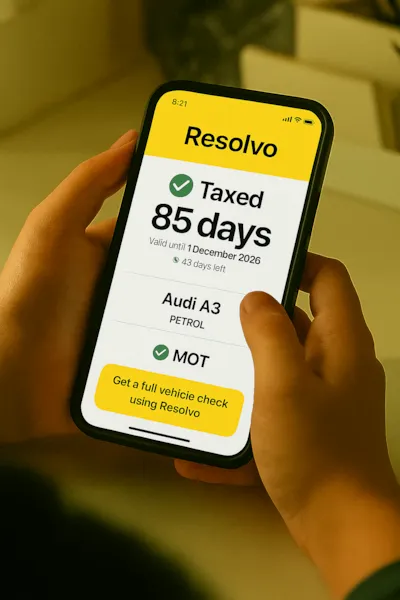

Have ever wondered why one car pays £20 in road tax and another pays £270 — or more?
It all comes down to CO₂ emissions. Whether your car is petrol, diesel, hybrid, or electric, the amount of carbon dioxide it emits plays a big role in what you’ll pay. Here’s how it works — and what’s changing in 2025.
Check if a vehicle is taxed, its tax band, expiry date and how much you'll pay
🧾 What Is Road Tax?
Road tax, officially called Vehicle Excise Duty (VED), is a tax you pay to legally use your car on UK roads. It helps fund road maintenance, infrastructure, and environmental policies — and it’s charged yearly.
What you pay depends on:
When your car was registered
Its CO₂ emissions
Its fuel type
Its list price (if over £40,000)
📊 Why CO₂ Emissions Matter
The government uses your car’s g/km CO₂ rating to determine how much pollution it causes. The more CO₂ your vehicle emits, the more road tax you’ll pay. The key thing to remember is
Lower emissions = lower tax.
Higher emissions = higher tax.
This system is designed to encourage people to drive more environmentally friendly vehicles.
Check Your Car CO₂ Emissions in seconds
🧱 Which CO₂-Based Tax System Applies to You?
It depends on when your car was first registered:
📅 1. Cars Registered Before 1 March 2001
These cars are taxed based on engine size only:
Up to 1549cc = £220 a year, if paid in a single 12 month payment
Over 1549cc = £360 a year, if paid in a single 12 month payment
📅 2. Cars Registered Between 1 March 2001 – 31 March 2017
Your road tax is based on your vehicle’s CO₂ emissions in grams per kilometre (g/km). There are 13 tax bands, from A to M. Here’s the full breakdown:
Band | CO₂ Emissions (g/km) | Annual Road Tax (VED) |
A | Up to 100 | £0 |
B | 101 – 110 | £20 |
C | 111 – 120 | £35 |
D | 121 – 130 | £150 |
E | 131 – 140 | £180 |
F | 141 – 150 | £200 |
G | 151 – 165 | £240 |
H | 166 – 175 | £290 |
I | 176 – 185 | £320 |
J | 186 – 200 | £365 |
K | 201 – 225 | £395 |
L | 226 – 255 | £675 |
M | Over 255 | £695 |
👉 If your vehicle is a diesel that doesn’t meet the Euro 6 standard, it may also pay a diesel supplement under more recent rules (post-2018 changes).
📅 3. Cars Registered on or After 1 April 2017
Your first year’s tax is based on CO₂ emissions, then a flat rate of £190/year after that.
If the car cost over £40,000 new, there’s an additional £410/year luxury tax for years 2–6.
⚠️ What’s Changed?
Since the 1st of April 2025, the UK government is removed the electric vehicle exemption.
That means:
Electric cars (0 g/km) will no longer be £0 tax
They’ll pay the standard annual rate like petrol/diesel cars (currently £190/year)
Expensive EVs (over £40,000) will also pay the luxury surcharge
This change affects new and existing EVs, and aims to “level the playing field” as EV sales grow.
💡 Example: Tax Comparison by CO₂
Vehicle Type | CO₂ (g/km) | First Year Tax | Ongoing Annual Tax |
Petrol hatchback | 112 g/km | £190 | £190 |
Diesel SUV | 178 g/km | £570 | £190 + £410 (if >£40k) |
Hybrid saloon | 93 g/km | £140 | £190 |
Electric vehicle (EV) | 0 g/km | £0 (until 2025) → £190 after | £190 |
✅ How to Check Your Tax Band
Use Resolvo tax checker to see to instantly see your:
Tax band
Expiry Date
Estimated annual cost
Fuel type and engine details
🧠 Common Questions
Do hybrids get cheaper tax? Often, yes — many fall into lower bands thanks to lower CO₂ emissions. But some newer hybrids still pay standard rates under post-2017 rules.
Will older cars pay more? Yes, especially those with high CO₂ ratings. You could be in Band M (£695/year) if your car emits 255+ g/km.
Can my tax band change? Not usually. Your CO₂ rating is fixed when your car is first tested and registered. But government rules around rates and surcharges can change.
Can I still pay monthly or by Direct Debit? Yes — most tax bills can be split into monthly or six-month payments via the DVLA site.
🛠 Final Thoughts
Your road tax isn’t just about your car’s age — it’s about how much CO₂ it emits. That’s why two similar-looking cars can have completely different tax bills.
Use Resolvo’s CO₂ Emissions Checker to find out exactly where your car stands — and what you’ll pay now or in 2026
And don’t forget, if you ever get an unfair parking fine, Resolvo helps you fight back in minutes for free
Free Resolvo Tools
Related Posts
What is SORN: Everything You Need to Know
6 November 2025
Need to declare your car off the road? Learn how SORN works, when to apply, penalties for not declaring, refund eligibility and your insurance options.

⚠️ MOT Advisories Explained: Everything You Must Know
13 January 2026
Your car passed but you got advisories. What do they mean? Should you fix them? Complete guide to MOT advisories + free tool to check your full history.
Clean Air Zones (CAZ) in the UK: All You Need to Know in 2026
27 October 2025
Driving through a Clean Air Zone in 2026? Find out which UK cities have CAZs, what vehicles are charged, who’s exempt, and how to appeal a fine with Resolvo
Got a Congestion Charge Ticket? Here's How to Fight and Beat It
6 October 2025
Got a ticket from a parking ticket from TFL? Learn how to appeal it in minutes, what your rights are, and how Resolvo helps you fight back — for free.
Should You Refinance Your Car? Cut Loan Costs & Save Money
3 December 2025
Thinking of refinancing your car? Find out if refinancing a PCP or HP deal is a smart move, how settlement figures work and how to compare new offers so you don’t end up paying more
🚗 Is Supermarket Petrol Bad for Your Car? Resolvo Explains
15 January 2026
Is supermarket fuel bad for your car? We bust the myths with real data, UK fuel standards, and expert advice. Save £200+ a year without risking engine damage.